


To respect and commemorate the people who have done great things for a world, stamps play a vital role. It is also a way to celebrate their life and commitment to the world. A personality that is featured on a stamp can be from any field. As you all know most of the Indian postal stamps are issued posthumously, but there are a few exceptions to this rule.
Here’s the list of Famous Indian alive personalities honoured on stamps!
Continue reading Alive Personalities honoured on stamps

The Mintage World Team comprises of experts, researchers and writers from the field of Philately, Notaphily and Numismatics who try to shed light on some of the most interesting aspects of coins, banknotes and stamps from not just India but across the globe as well.
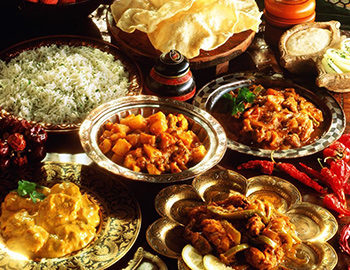
Encompassed with the wide variety of savouries, the vast and diverse land of Indian peninsula has an enormous number of different cuisines that reflect its rich culture. Indian cuisine is the combination of regional and traditional delicious. The flow of travellers from the neighbouring and far-off lands had bought their own surprising change to the Indian food culture, making it more enduring and tasty. The history of various groups and cultures interacting over the sub-continent is impressively reflected through the different varieties of food prepared here. The modern Indian cuisine what we see today in all corners of this land is diverse in its flavour, culinary and dietary forms. Indian cuisine on stamps is the outstanding example to represent the influence of food tradition in India beautifully. Continue reading Flavour of Indian cuisine on stamps
The Mintage World Team comprises of experts, researchers and writers from the field of Philately, Notaphily and Numismatics who try to shed light on some of the most interesting aspects of coins, banknotes and stamps from not just India but across the globe as well.
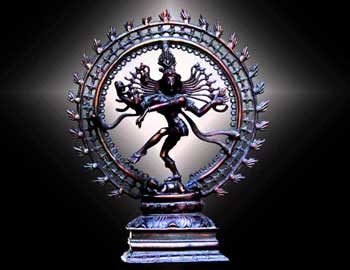
India is a land of beauty, art and a land of diversity. In spite of its varied cultures and traditions it is united by the melodies, the rhythms, and an unparalleled zest in enjoying music! It is not a surprise that each of these diverse regions have evolved a distinctive style of music and dance adding more colours to this already rich culture of India. Dance is an emotion, Dance is an Expression, Dance is freedom and Dance is a way of life. India is home to many different dance styles. All these dance forms were suppressed during the British rule and after independence Indian Government has taken great efforts to re-establish these jewels of the Indian culture. India Post in 1975 has commemorated these Indian Classical Dances on Stamps.
Continue reading Indian Classical Dances on Stamps!
The Mintage World Team comprises of experts, researchers and writers from the field of Philately, Notaphily and Numismatics who try to shed light on some of the most interesting aspects of coins, banknotes and stamps from not just India but across the globe as well.
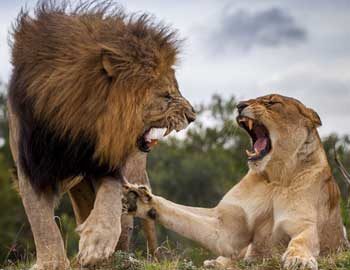
India is rich in all the aspects! Along with its peculiar melange of cultures and traditions, India has wide spectrum of flora and fauna too. Being the seventh largest country of the world, India has a variety of geographical zones with at least three major biodiversity hotspots. It is also one of the 17 mega-diverse countries of the world. The region’s diverse wildlife is preserved in more than 120 national parks, 18 Bio-reserves and more than 500 wildlife sanctuaries across the country. India Post has always attempted to honour the uniqueness of India on its stamps. On October 1st 1976, India Post issued a set of four stamps commemorating the untamed wildlife of India. In this blog we will be discussing about the various types of Animals on Indian Stamps. Continue reading Wild and Untamed: Animals on Indian stamps
The Mintage World Team comprises of experts, researchers and writers from the field of Philately, Notaphily and Numismatics who try to shed light on some of the most interesting aspects of coins, banknotes and stamps from not just India but across the globe as well.

When we were young all of us were ever so excited to watch the train storm past us. Running at a lightning speed, trains have always captured our imaginations as it goes by making a peculiar noise bound towards an unknown far away destination.
Did you know that India is the fourth largest railway network in the world comprising of 119,630 kilometers of total track with over 7,216 stations! Indian Railways also happens to be the world’s eighth-largest employer by number of employees (1.4 million).
Continue reading Rail Gadi: Indian Locomotives on stamps!
The Mintage World Team comprises of experts, researchers and writers from the field of Philately, Notaphily and Numismatics who try to shed light on some of the most interesting aspects of coins, banknotes and stamps from not just India but across the globe as well.
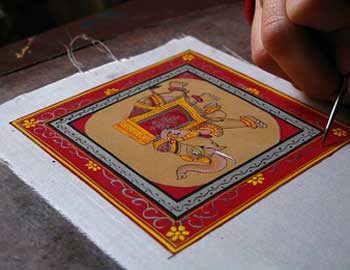
India has been a riot of colours with each region developing a culturally unique style of paintings! Miniature Paintings undoubtedly are the best of all. Starting from merely being the illustrations for religious texts, Miniature Paintings have stolen many hearts with its varied topics of depiction. Originally the sacred texts were written on long narrow strips of palm leaves bound together in form of a bundle. Due to the size of the palm leaf that was usually one foot long and less than 3 inches wide, the area available for painting the illustrations was limited. The illustrations, therefore, are miniature in size and hence came to be known as “Miniature Painting”. These manuscripts were meant to be held in one’s hands and viewed from a close distance.
Continue reading Indian Miniature Paintings on Stamps
The Mintage World Team comprises of experts, researchers and writers from the field of Philately, Notaphily and Numismatics who try to shed light on some of the most interesting aspects of coins, banknotes and stamps from not just India but across the globe as well.
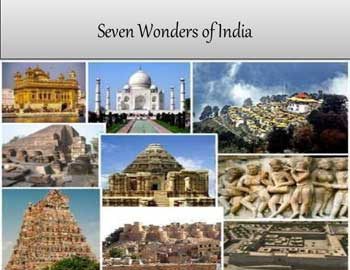
‘Shrusti Devo Shilpam, TTasya Pratikruti Manushya Shilpam’, it means ‘Nature is the art of god and human art is just a gist and imagination of it’. Therefore, the art developed by the men is influenced and copied from the nature. Indian art and architecture has beautiful and magnificent examples of this brilliant influence. These monuments are the insignia of Indian culture and tradition. There are so many of such splendid structures on this land, yet the best chosen among them are renowned monuments known all over the world as the “seven wonders of India”. These massive architectural miracles have ornamented this land with its splendid beauty.
Continue reading Architectural marvels of all time: Seven Wonders of India
The Mintage World Team comprises of experts, researchers and writers from the field of Philately, Notaphily and Numismatics who try to shed light on some of the most interesting aspects of coins, banknotes and stamps from not just India but across the globe as well.
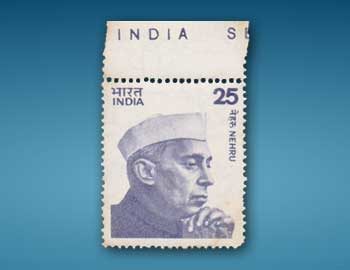
“Separation” is the general term used to describe methods used to separate postage stamps. The three standard forms currently in use are perforation, roulette, and die-cutting. These methods are done during the postage stamp production process, after printing. Sometimes these methods are done on-press or sometimes as a separate step. The earliest issues such British-India 4 annas, half anna and one anna did not have any means provided for separation as seen in the image below. The stamps were probably cut apart with scissors or folded and torn.
Continue reading Postage Stamp Separation
The Mintage World Team comprises of experts, researchers and writers from the field of Philately, Notaphily and Numismatics who try to shed light on some of the most interesting aspects of coins, banknotes and stamps from not just India but across the globe as well.
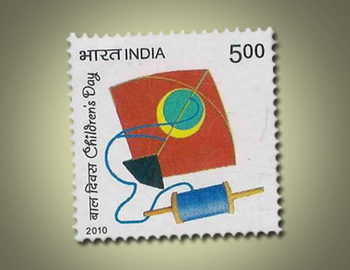
Makar Sankranti is a festival held across India under a variety of names to honor the God of the sun, Surya. Though often relegated to a secondary position relative to the three prominent Hindu deities – Brahma, Vishnu, and Shiva, Surya was a key figure in the ancient Hindu texts, the Vedas, and is the subject of one of the most repeated texts of Hindu liturgy, the Gayatri Mantra. Many devout Hindus chant this mantra daily as a part of their morning ritual.
Continue reading Mintage World Celebrates Makar Sankranti
The Mintage World Team comprises of experts, researchers and writers from the field of Philately, Notaphily and Numismatics who try to shed light on some of the most interesting aspects of coins, banknotes and stamps from not just India but across the globe as well.
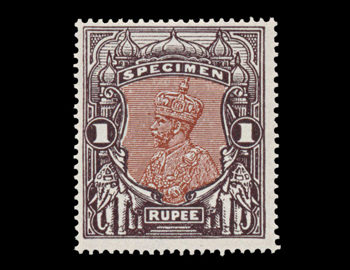
Postage Stamp Paper is made of an organic material composed of a compacted weave of cellulose fibers which is generally formed into sheets. Paper used to print postage stamps may be manufactured in sheets or it may have been part of a large roll (called a web) before being cut to size. The fibers most often used to create postage stamp paper include bark, wood, straw and certain grasses. In many cases, linen or cotton rags have been added for greater strength and durability. Grinding, bleaching, cooking and rinsing these raw fibers reduce them to a slushy pulp, referred to by paper makers as “stuff.” Sizing and sometimes, coloring matter is added to the pulp to make different types of finished paper.
Continue reading Postage Stamp Paper
The Mintage World Team comprises of experts, researchers and writers from the field of Philately, Notaphily and Numismatics who try to shed light on some of the most interesting aspects of coins, banknotes and stamps from not just India but across the globe as well.
