

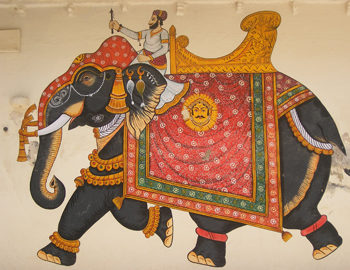
Elephants play a very important role in many cultures and traditions. But we do not have to go deep into the “cultural” and “religious” significance of these majestic animals to understand why they are such a hit with the public! Just type ‘elephant’ in your Google search and you will find so many adorable videos and images of elephants. Right from the “Manny” of Ice Age (although Manny is a mammoth) to “Snorky” of the Banana Splits Club, our cartoons, movies and Facebook walls are full of cute elephants. Today we find elephants all over the social media, but in the ancient and the medieval times, they adorned various paintings, sculptures and coins! Let’s continue our journey of exploring elephants on Indian coins.
Continue reading Elephants on Indian coins: An overview and history – Part II
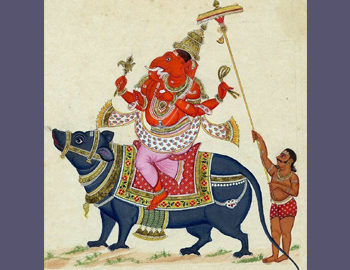
The cute pot-bellied god ‘Ganesha’ is appreciated and worshipped beyond India also. He is popularly known as ‘The Elephant-headed God’ and is usually a favourite god of children. The earliest reference to Ganesha is found in Rig Veda. It is believed that Ganesha was born from the dirt of Parvati. He is worshipped in every corner of India, but do you know that he is worshipped beyond India too? Not only that, these countries even have Ganesha on stamps!

Banavasi is a tiny town on the border of north Karnataka and Shimoga districts. It is mentioned in inscriptions and literature as Vanavasa, Vanavasaka, Vanavasi, Banavase, and Banavasi. It is stated in Mahavamsa that Asoka’s emissary Buddha Rakshita was deputed to Vanavasi. Banavasi has grown around the Madhukeshwara temple built in the 9th century, dedicated to Lord Shiva. It also appears to have been the southern headquarters of the Satavahanas. The town was the capital of the Chutus and the Kadamba rulers.
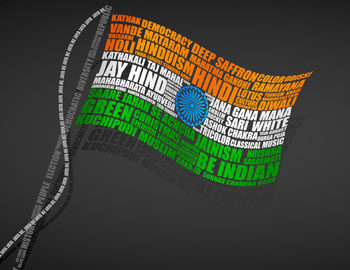
“We, the people of India, having solemnly resolved to constitute India into a Sovereign, Socialist, Secular, Democratic, REPUBLIC …. do Hereby Adopt, Enact and give to ourselves this Constitution.” India will be celebrating its 69th Republic Day. Each year this day is marked with grand ceremonious parades at New Delhi which celebrate the day when the Constitution of India came into effect making India a fully independent sovereign state!
This Republic Day let’s familiarise ourselves with the founding pillars of our nation, its history and a little something about our Constitution!
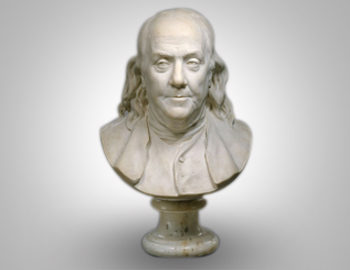
Did you know that it is Benjamin Franklin who is presently featured on the 100 American dollar bill? One of the nation’s founding fathers, he was famously called by many as the ‘first Citizen of the 18th century’. A writer, inventor, politician, and diplomat, as a boy, Franklin was an apprentice to his brother, which exposed him to new books and ideas. His first financial and literary success was ‘Poor Richard Almanac’ which was filled with illustrations, proverbs, and paradoxes of his own creation.
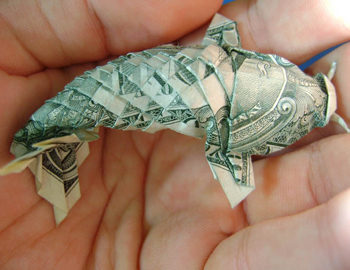
Your parents must have told you that ‘do not fold the paper currency’ or ‘don’t scribble or write anything on currency notes’. Everyone sees Currency note as a legal tender which is used to purchase goods and commodities. But what if we tell you that the artists have imaginations which are far away from us because they are using every medium to paint or doodle on. We can guess what’s running in your mind…and bang on you are right! It’s the “Dollar Bill Art” Continue reading The Dollar Bill Art
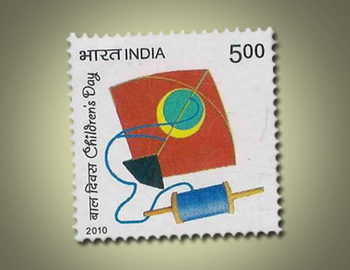
Makar Sankranti is a festival held across India under a variety of names to honor the God of the sun, Surya. Though often relegated to a secondary position relative to the three prominent Hindu deities – Brahma, Vishnu, and Shiva, Surya was a key figure in the ancient Hindu texts, the Vedas, and is the subject of one of the most repeated texts of Hindu liturgy, the Gayatri Mantra. Many devout Hindus chant this mantra daily as a part of their morning ritual.
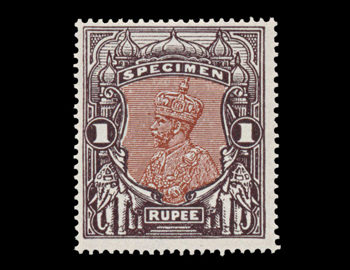
Postage Stamp Paper is made of an organic material composed of a compacted weave of cellulose fibers which is generally formed into sheets. Paper used to print postage stamps may be manufactured in sheets or it may have been part of a large roll (called a web) before being cut to size. The fibers most often used to create postage stamp paper include bark, wood, straw and certain grasses. In many cases, linen or cotton rags have been added for greater strength and durability. Grinding, bleaching, cooking and rinsing these raw fibers reduce them to a slushy pulp, referred to by paper makers as “stuff.” Sizing and sometimes, coloring matter is added to the pulp to make different types of finished paper.

Of the five great European maritime powers of the sixteenth and seventeenth centuries, France was the fourth to enter the race for commercial communication with India. The fifth power, Spain, never attempted the contest, and Portugal, Holland, and England had reaped considerable benefits from their enterprise before the attention of the French people had been sufficiently attracted to the trade. Nevertheless, though the French were the last to enter upon the venture, their natural genius asserted itself in a manner that speedily brought them to a level with the most securely planted of their European rivals by establishing the French East India Company.
Continue reading French East India Company- History and Coinage
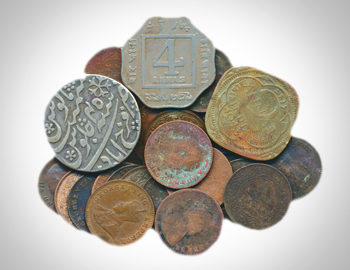
The world is a dangerous place for valuable coins. Hazards lurk in the air, in storage containers, and even on collector’s fingertips. Exposure to these hazards can subject a rare coin to irreparable damage that can greatly diminish its value. Fortunately, there are ways to guard against such risks and maintain these coins in their original and pristine condition using different coin cleaning methods. There are also ways of protecting coin investments by storing them properly. All these prudent steps can make the world a much safer place for rare coins.
