
2026-10-13 Tue
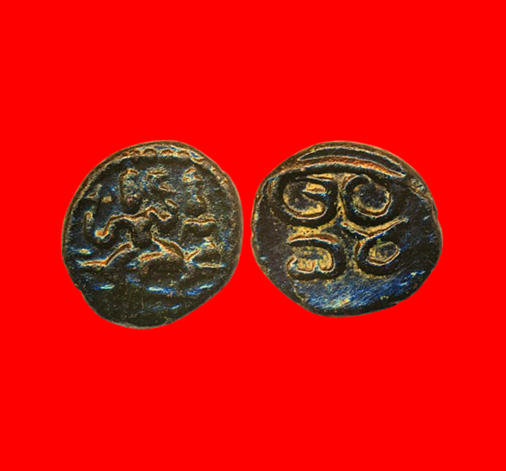
On the third day of Navaratri, we celebrate the divine feminine power, or Shakti, and pay tribute to the Goddess in her many revered forms. Marking this auspicious occasion, we present a fascinating copper coin of the Nayakas of Madurai, featuring a seated divine couple on its obverse.
Coins are more than instruments of commerce; they are also miniature historical records that preserve the religious beliefs, artistic traditions and cultural identities of the kingdoms that issued them. This coin offers a glimpse into the devotional world of southern India, where divine imagery played an important role in both temple traditions and coinage.
The Nayakas of Madurai were a prominent ruling dynasty in southern India that governed Madurai and its surrounding territories from the 16th to the 18th century. Their rise followed the expansion of the Vijayanagara Empire into the Tamil region.
Among the best-known rulers was Thirumalai Nayaka (1623–1659), whose reign witnessed significant architectural and cultural activity. His contributions included the construction of the celebrated Thirumalai Nayakar Palace and extensive building and renovation work associated with Madurai's temples. The dynasty helped shape the region's architectural landscape through elaborate mandapas, sculptural programmes and monumental structures.
The Meenakshi Amman Temple, dedicated to Goddess Meenakshi and Lord Sundareswarar, occupied a central place in Madurai's religious and cultural life. The prominence of the divine couple in the region's devotional traditions also finds an echo in the religious imagery found on Madurai Nayaka coins.
The Nayakas ruled until 1736, leaving a lasting legacy in the history, architecture and cultural heritage of Tamil Nadu.
The coinage of the Madurai Nayakas reflects the region's religious traditions, political identity and monetary requirements. The dynasty issued coins in metals including gold, silver and copper, with copper kasus serving as an important part of everyday currency.
Madurai Nayaka coins are particularly interesting for their variety of designs. They feature Hindu deities, sacred symbols, animals and royal emblems. Inscriptions appear in scripts including Tamil, Telugu and Kannada, reflecting the linguistic and cultural influences of the period.
Here, the obverse of the coin depicts a god and goddess seated together. The reverse bears the legend “Sri Vira” in Tamil, as described for this specimen.
The use of copper for this 1.65-gram kasu also illustrates the role of smaller-denomination coins in the monetary system of the period. Unlike elaborate temple sculptures or monumental inscriptions, coins circulated among people and carried their imagery into everyday life.
-
A Seated Goddess and a Lion on a Gold Fanam of the Hoysalas of Dwarasamudra
2026-10-13 TueThe Hoysalas were a prominent medieval South Indian dynasty that ruled large parts of present-day...
-
A Seated Goddess on a Vijayanagara Copper Coin
2026-10-12 MonNavratri is a festival dedicated to the worship of the Divine Mother, celebrated in different for...
-
A Divine Tribute to Goddess Chamundi: Krishna Raja Wodeyar’s Silver Pavali
2026-10-12 MonOn the second day of Navratri, let us pay tribute to Devi Maa through a remarkable silver coin of...
-
Bow and Arrow on an Ancient Chera Copper Coin of the Sangam Age
2026-10-09 FriIn our ongoing series exploring the coinage of the Sangam Age, this uninscribed copper coin attri...
-
Symbolic Motifs on an Ancient Chola Copper Coin of the Sangam Age
2026-10-09 FriThe Chola dynasty was one of the three great ruling houses of ancient Tamilakam, alongside the Ch...