
2026-10-12 Mon
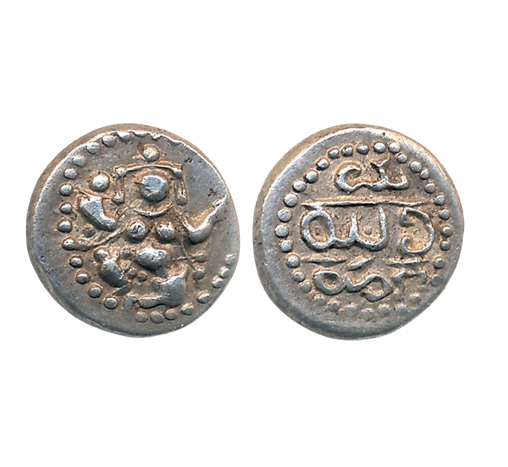
On the second day of Navratri, let us pay tribute to Devi Maa through a remarkable silver coin of the Mysore kingdom, featuring the dancing figure of Goddess Chamundi.
Navratri is a celebration of the divine feminine power, or Shakti, worshipped in her many forms across India. Among these revered manifestations is Goddess Chamundi, also known as Chamundeshwari, the presiding deity of Mysore and a powerful symbol of courage, protection and divine strength. This silver coin issued during the reign of Krishna Raja Wodeyar offers a fascinating intersection of faith, regional history and numismatic artistry.
Krishna Raja Wodeyar III (1799–1868), also known as Mummadi Krishnaraja Wadiyar, belonged to the Wodeyar dynasty, which ruled the princely state of Mysore. Following the fall of Tipu Sultan in 1799, the Wodeyar dynasty was restored to the throne, with the young Krishna Raja Wodeyar III becoming its ruler. During his early years, the administration was guided by Dewan Purnaiah.
The Wodeyars maintained a strong association with Hindu religious traditions, and Goddess Chamundeshwari held a particularly important place in the royal and cultural identity of Mysore. This devotion found expression in the kingdom’s coinage, where religious imagery became an enduring feature of its monetary heritage.
The featured coin is a silver 1/3 rupee, commonly described as a Pavali, weighing approximately 0.91 grams. It belongs to the coinage associated with Krishna Raja Wodeyar.
The obverse presents a distinctive dancing figure identified as Goddess Chamundi, enclosed within a circle of dots. The dynamic pose gives the small silver coin a striking visual character, transforming it from a medium of exchange into a representation of religious and cultural identity.
Goddess Chamundeshwari is closely associated with the Chamundi Hills overlooking Mysuru. She is revered as a manifestation of the Divine Mother and is traditionally associated with the destruction of evil, the triumph of righteousness and the protection of devotees.
Her connection with Mysore makes this coin especially meaningful during Navratri, when devotees honour the many forms of the Goddess and celebrate the victory of good over evil.
The reverse bears a Kannada inscription, traditionally read as “ಮಯಿಲಿ ಹಣ” (Mayili Hana), arranged in three lines. The use of Kannada connects the coin with the linguistic and cultural traditions of the Mysore region.
The combination of a locally significant script and religious imagery illustrates how regional identity and devotional traditions could be reflected in the coinage of a princely state.
The presence of the Goddess on a silver coin also highlights how religious reverence extended beyond temples and rituals into everyday life. Through such coins, the imagery associated with the sacred became part of the material history of the kingdom.
This silver Pavali is more than a small piece of precious metal. It preserves a glimpse of Mysore’s royal heritage, its regional language and its enduring devotion to Goddess Chamundeshwari. Its dancing figure brings together art, faith and monetary history in a form that continues to fascinate collectors and history enthusiasts.
-
A Seated Goddess on a Vijayanagara Copper Coin
2026-10-12 MonNavratri is a festival dedicated to the worship of the Divine Mother, celebrated in different for...
-
Bow and Arrow on an Ancient Chera Copper Coin of the Sangam Age
2026-10-09 FriIn our ongoing series exploring the coinage of the Sangam Age, this uninscribed copper coin attri...
-
Symbolic Motifs on an Ancient Chola Copper Coin of the Sangam Age
2026-10-09 FriThe Chola dynasty was one of the three great ruling houses of ancient Tamilakam, alongside the Ch...
-
Iconography of Chera Dynasty on a Square Copper Coin
2026-10-08 ThuThe Cheras were one of the three great crowned dynasties of ancient Tamilakam, alongside the Chol...
-
Decoding the Symbols of a Sangam Age Pandyan Copper Coin
2026-10-08 ThuThe Sangam age is generally placed broadly between c. 300 BCE and 300 CE, although the chronology...