
2026-11-12 Thu
The Kuras were among the lesser-known ruling dynasties of ancient India, whose coins provide valuable evidence of their political authority and regional influence. They are generally associated with the Deccan region, particularly parts of present-day Maharashtra, where several local dynasties and ruling families emerged during the post-Mauryan and early historic periods. Their history is primarily reconstructed through numismatic and epigraphic evidence, as detailed literary accounts of their reigns are scarce.
Among the known rulers of the Kuras dynasty was King Gautamiputra Vilivayakura, whose coins are important historical records of his authority. The use of the matronymic Gautamiputra reflects a naming convention also observed among other contemporary Deccan ruling families, most notably the Satavahanas. Such names provide insights into the social and political traditions of the period.
The Kuras are believed to have been a distinct ruling family rather than merely subordinate chiefs of the Satavahanas. Numismatic evidence, particularly coins recovered from excavations at Kolhapur, has helped establish their independent political identity. The sequence of overstruck coins indicates that Gautamiputra Vilivayakura succeeded earlier Kura rulers, including Vasishthiputra Vilivayakura and Madhariputra Sivalakura. His reign is generally placed in the early centuries CE.
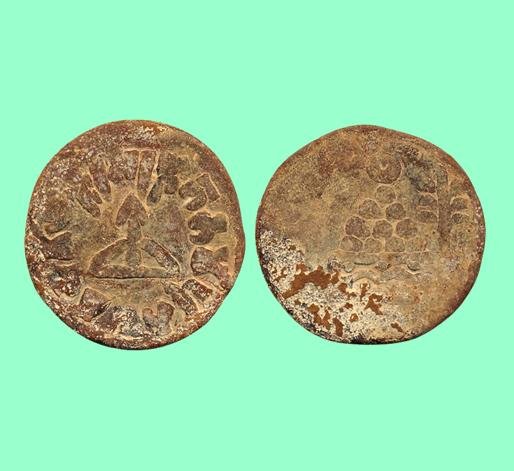
The showcased coin is an interesting example of the lead coinage issued by the Kuras of Kolhapur. Weighing 11.40 grams, it showcases distinctive motifs and a Brahmi inscription that help identify its issuing ruler.
The obverse features a bow and arrow placed prominently at the centre, surrounded by the Brahmi legend “Rajno Gotamiputasa Vilivayakuras”, identifying the issuer as King Gautamiputra Vilivayakura. The bow and arrow were characteristic symbols of Kura coinage and served as an important marker of the dynasty's identity.
The reverse depicts a ten-arched hill accompanied by a tree, combining two prominent motifs found in the early historic coinage of the Deccan. The multi-arched hill, commonly interpreted as a chaitya or hill symbol, reflects the distinctive religious and artistic vocabulary of contemporary Indian coinage. The tree motif further connects the design with the symbolic traditions prevalent in the region.
The Kuras primarily issued lead coins, making their coinage particularly distinctive among the contemporary ruling families of the Deccan. Their issues provide valuable insights into regional political authority, dynastic succession, artistic conventions and monetary practices during the early historic period.
The coin of Gautamiputra Vilivayakura is therefore more than a medium of exchange; it is an important numismatic record preserving the name, authority and distinctive identity of a lesser-known dynasty in the history of ancient India.
-
Silver Portrait Drachma of Gautamiputra Siri Yajna Satakarni, Satavahanas
2026-11-12 ThuThe Satavahanas were among the most prominent ancient Indian dynasties, ruling large parts of the...
-
Anandas of Banavasi – Rano Visnu Rudra Buddhananda, Bull to Left Type
2026-11-11 WedLet us have a look at another fascinating coin from the Anandas of Banavasi, continuing our explo...
-
Striking Lead Coin of the Anandas of Banavasi
2026-11-11 WedThe Anandas of Banavasi represent an important chapter in the early historic coinage of Karnataka...
-
Rare Silver Dramma of Aparaditya, Shilaharas of North Konkan
2026-11-10 TueThe Shilaharas were an important ruling dynasty of western India, who governed different regions ...
-
Silver Dramma of Rashtrakuta King Amoghavarsha I
2026-11-10 TueThe Rashtrakutas were among the most powerful imperial dynasties of early medieval India, ruling ...