
2026-11-10 Tue
The Shilaharas were an important ruling dynasty of western India, who governed different regions of the Konkan and parts of present-day Maharashtra between the eighth and thirteenth centuries CE. They were divided into three principal branches: the Shilaharas of North Konkan, South Konkan and Kolhapur. The North Konkan branch, with its capital at Sri Sthanaka (modern Thane), played a significant role in the political and cultural history of the region. The dynasty initially ruled as feudatories of the Rashtrakutas and later asserted its independence. The Shilaharas patronised Hindu temples, religious institutions, literature and regional traditions, leaving a lasting imprint on the history of the Konkan.
Aparaditya, also known as Apararka, was one of the most illustrious rulers of the North Konkan branch of the Shilaharas. He was renowned not only for his political authority but also for his exceptional scholarship in religious and legal literature. A distinguished scholar of the Dharma Shastras, Aparaditya is credited with composing an extensive commentary, known as the Apararka-teeka, on the Yajnavalkya Smriti, an important ancient Hindu text dealing with religious duties, law and social conduct. His intellectual contributions reflect the flourishing tradition of Sanskrit scholarship under the Shilahara rulers.
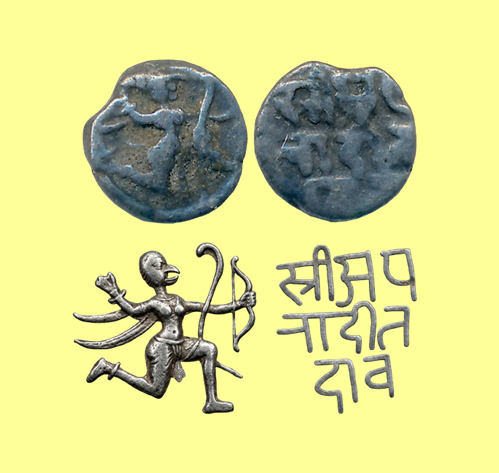
This extremely rare silver dramma, weighing 0.54 g, is attributed to Aparaditya. The obverse depicts Garuda running towards the right while holding a snake. Garuda, the divine vehicle of Lord Vishnu, was an important symbol in Hindu religious and royal iconography. The depiction of Garuda overpowering or holding a serpent carries mythological associations with his eternal enmity towards the Nagas and symbolises strength and divine power.
The reverse bears a three-line Devanagari legend reading “Sri Apa / ra Dita / Deva”, identifying the issuing ruler as Sri Aparadita Deva.
Silver coins of Aparaditya are exceedingly rare, and this is probably only the third known specimen. Graded about Very Fine, this remarkable coin offers valuable evidence of the coinage and royal symbolism of the Shilaharas of North Konkan.
-
Silver Dramma of Rashtrakuta King Amoghavarsha I
2026-11-10 TueThe Rashtrakutas were among the most powerful imperial dynasties of early medieval India, ruling ...
-
Goddess Lakshmi on a Gold Half Varaha of Harihara II, Vijayanagara Empire
2026-11-06 FriOn the auspicious occasion of Diwali, the festival of lights, prosperity and new beginnings, we c...
-
Celebrating Dhanteras with a Magnificent Gold Dinar of Chandragupta II
2026-11-06 FriDhanteras is traditionally associated with the worship of Goddess Lakshmi, the deity of wealth an...
-
Goddess Lakshmi on Gold Dinar of Skandagupta Coin
2026-11-05 ThuSkandagupta (c. 455–467 CE) was one of the most prominent rulers of the Gupta Empire, renowned ...
-
Numismatic Tribute to Lord Damodara on Ekadashi
2026-11-05 ThuEkadashi, the eleventh day of the lunar fortnight in the Hindu calendar, holds special religious ...