
2026-10-15 Thu
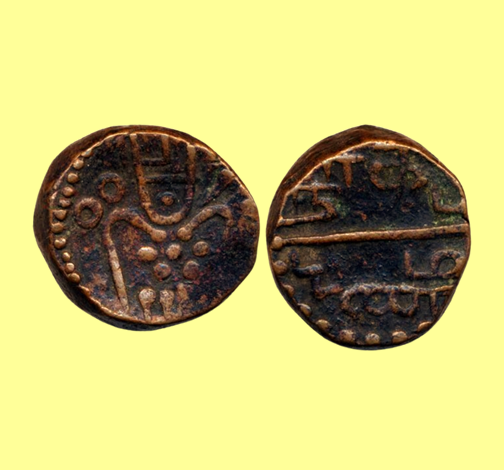
In the spirit of Navratri, a copper coin from Nagapattinam bearing the facing figure of Goddess Kali offers a fascinating connection between India's numismatic heritage and its enduring traditions of goddess worship.
Nagapattinam, situated on the southeastern coast of Tamil Nadu along the Bay of Bengal, has a history closely associated with maritime trade, religious exchange, and the cultural development of southern India. Its strategic coastal location made it an important link between the fertile Kaveri delta and overseas trading networks connecting Sri Lanka and Southeast Asia.
The town flourished under the Cholas, particularly during the medieval period, when the Chola Empire expanded its commercial and maritime connections across the Bay of Bengal. Nagapattinam served as an important port through which merchants, goods, and cultural influences moved between South India and distant lands.
Nagapattinam was also notable for its religious diversity. Alongside established Hindu temples, the town became an important centre of Buddhist activity. Historical records and copper-plate grants refer to Buddhist monasteries supported by rulers from the Chola and Srivijaya kingdoms. One notable institution was the Chudamani Vihara, associated with Srivijaya patronage and the reign of Rajaraja Chola I. These connections demonstrate the close relationship between maritime commerce, diplomacy, and religious patronage in the region.
This long history of regional kingdoms, overseas trade, and European commercial activity makes Nagapattinam an especially interesting subject for collectors studying the coinage of South India and its maritime past.
The coin under discussion is a copper stuiver weighing 26.64 grams, associated with Nagapattinam. Its imagery and inscription distinguish it as an interesting example of the town's historical coinage.
The obverse features a facing figure of Goddess Kali. Her presence connects the coin with the religious traditions of the Indian subcontinent, where images of powerful deities frequently appeared in regional artistic and numismatic traditions. Kali's fierce divine character represents the destruction of evil and the protective force of Shakti.
The frontal presentation of the Goddess gives the design a strong visual impact. Her depiction also provides a striking contrast to the commercial purpose of the coin, bringing sacred imagery into an object used in everyday economic life.
The reverse bears the Tamil legend “Nakapattanam”, arranged in two lines. The inscription identifies the town and is an important feature for understanding the coin's regional association. The use of Tamil reflects the local linguistic environment, even as Nagapattinam participated in international commercial networks.
The denomination is described as a stuiver, a term associated with Dutch monetary traditions. Together, the denomination, Tamil inscription, and religious imagery invite further study of the coin's historical context and the relationship between local identity and European commercial influence.
-
Shiva and Parvati on a Gold Varaha of Devaraya I, Vijayanagara Empire
2026-10-15 ThuNavratri celebrates the many manifestations of the Divine Feminine, or Shakti, representing the p...
-
Celebrating Navratri through Numismatics: Gold Pagoda of the Kadambas of Hangal
2026-10-14 WedThe coinage of medieval Karnataka offers fascinating insights into the political authority, artis...
-
Kubera, God of Wealth, on a Rare Dramma of the Early Rashtrakutas
2026-10-14 WedThe coinage of medieval Maharashtra offers fascinating glimpses into the region’s political his...
-
Seated Divine Couple on a Copper Kasu of the Nayakas of Madurai
2026-10-13 TueOn the third day of Navaratri, we celebrate the divine feminine power, or Shakti, and pay tribute...
-
A Seated Goddess and a Lion on a Gold Fanam of the Hoysalas of Dwarasamudra
2026-10-13 TueThe Hoysalas were a prominent medieval South Indian dynasty that ruled large parts of present-day...