
2026-06-18 Thu
The Hiranyakas were a local dynasty that rose in the mid-3rd century CE, in Rayalaseema region that includes south-western Andhra Pradesh and adjoining south-central Karnataka after the decline of the Satavahana Empire. They are known almost exclusively from their lead coins and a few inscriptions or references in the context of neighboring powers like the Ikshvakus. They ruled 250–350/400 CE, contemporary to late Ikshvakus and early Pallavas.
The Hiranyakas coins were made up of heavy Lead and Potin. It ranges from 8–17 grams. They were crude, thick, often irregular round or slightly square or rectangular. Most specimens of coins are found from hoards in Anantapur, Kurnool, and surrounding Rayalaseema areas.
King Khadakama ruled around 200-300 CE. The coinage shows him as Mah?sen?pati or Mah?talavara, suggesting he rose from a feudatory position to independent kingship. His coins are heavy lead units, typically 13–17 grams. His coins indicate a transition from Mahasenapati to R?ño which means achieving full royal status from military leadership.
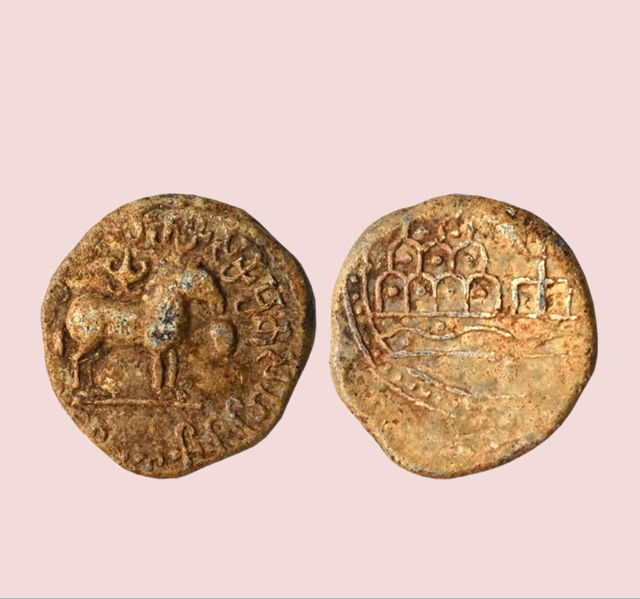
The coin in portrait depicts horse standing facing right on a platform, a Shrivatsa above it back and a solid ball in front of the mouth, Brahmi legend “Rano Kosikiputasa Herañak?n?m (Siri)….” around on the obverse. The reverse features Ten arched hill and a tree in railing over a platform with curvy line below, all enclosed in a circular dotted border.
-
Lead Coin of Satavahana, Ruler Siri Satakarni
2026-06-18 Thu<p>The Satavahanas were a major ancient Indian dynasty that ruled large parts of the Deccan i.e. sou...
-
Multi-script, Multi-lingual 40 Cash issued by Madras Presidency of East India Company
2026-06-17 Wed<p>The Madras Presidency was one of the three major administrative subdivisions of East India Compan...
-
Multi-script, Multi-lingual Coin issued by Bengal Presidency of EIC
2026-06-17 Wed<p>The East India Company (EIC) established trading posts in the Mughal Bengal Subah in the early 16...
-
Silver Quarter Rupee Coin of Travancore Maharaja Bala Ram Varma II
2026-06-16 Tue<p>Varma Kings of Kerala primarily refer to the royal families of Travancore and to some extent Coch...
-
Chamundi Pavli of Mysore King Krishna Raj Wodeyar
2026-06-16 Tue<p>The Mysore (Mahisuru) Kingdom was a major and important South Indian kingdom that was ruled by va...