
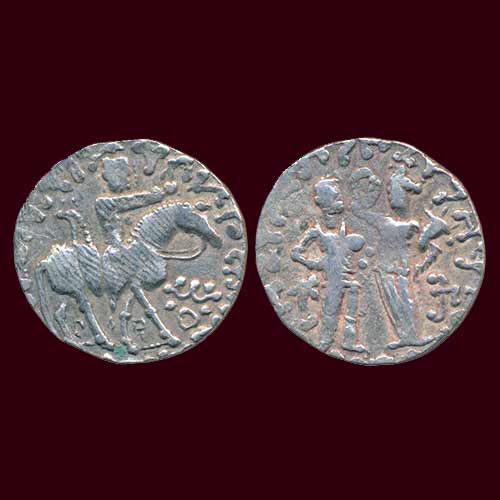
Silver Tetradrachm of Indo-Scythians ruler Zeionises
2020-11-10 Tue
The Indo-Scythian or Saka were the nomadic people; who came from Central Asia and later made their way into Bactria in the second century BCE. They were the group of Iranian people of Saka and were of Scythian origin. They migrated southward into western and northern South Asia from the middle of the 2nd century BC to the 4th century AD.Zeionises was the ruler of Indo-Scythians, he ruled the part of the Indian subcontinent around 10 BCE – 10 CE but lost his territory to the invasion of the Indo-Parthians.
This silver Tetradrachm that weighs around 9.8g was issued by him during his rule. The obverse of this coin depicts ‘king in Parthian attire and holding whip on horseback, Buddhist Triratna ("three Jewels") to right’. The reverse of this coin is inscribed as ‘king standing right, being crowned with a wreath by Tyche standing left, holding cornucopia, monograms to left and right’.
Image Courtesy: Todywalla Auction
Latest News
-
Elephant and Lion on a Copper Coin of the Sangam Cholas
2026-09-24 ThuThe elephant and lion were powerful animal symbols in the artistic and political traditions of an...
-
Ganesha and Shiva Together on a Coin of the Shiv Ganga Rajas
2026-09-25 FriOn Anant Chaturdashi, devotees bid farewell to Lord Ganesha with prayers and devotion, celebratin...
-
Elephant on a Punch-Marked Coin of the Vidarbha Janapada
2026-09-23 WedThe history of Indian coinage begins with the remarkable tradition of punch-marked coins, among t...
-
Gandabherunda and Four Elephants on a Gold Half Varaha of Achyutadevaraya
2026-09-23 WedThe Gandabherunda, the mythical two-headed bird of Indian tradition, is one of the most striking ...
-
The Elephant on an Indo-Greek Silver Drachm of Apollodotus I
2026-09-22 TueElephants were not just an important part of Indian heritage and religious traditions; they also ...