
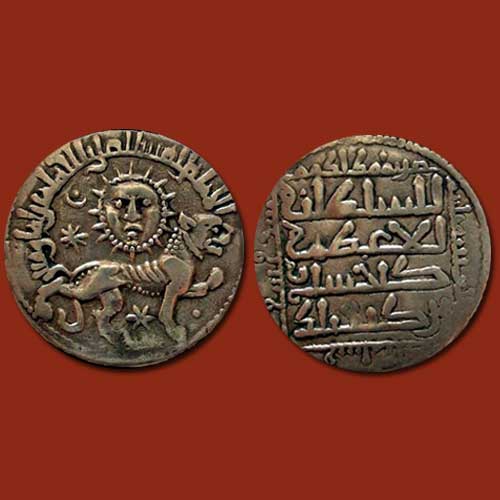
Coinage of Ghiyath ad-Din Keyhusrev
2020-07-01 Wed
Ghiyath ad-Din Keyhusrev bin Kayqubad was the sultan of the Seljuqs of Rum from 1237 until his death in 1246. He ruled at the time of the Babai uprising and the Mongol invasion of Anatolia. He led the Seljuq army with its Christian allies at the Battle of Kose Dag in 1243. He was the last of the Seljuq sultans to wield any significant power and died as a vassal of the Mongols.Between 638 and 641 A.H., a series of remarkable silver Dirhams were struck in Keyhusrev’s name at Sivas and Konya depicting a lion and sun. While coins with images are not unknown in Islamic lands, particularly in the centuries following the Crusades, some Islamic traditions forbid representations of living things.
Several explanations of the lion and sun have been offered. One suggests that the images represent the constellation Leo, the astrological sign of Keyhusrev's beloved Georgian wife Tamar. Another says that the lion represents Keyhusrev and the sun Tamar.
Image Source: Wikidepdia.org
Latest News
-
Elephant and Lion on a Copper Coin of the Sangam Cholas
2026-09-24 ThuThe elephant and lion were powerful animal symbols in the artistic and political traditions of an...
-
Ganesha and Shiva Together on a Coin of the Shiv Ganga Rajas
2026-09-25 FriOn Anant Chaturdashi, devotees bid farewell to Lord Ganesha with prayers and devotion, celebratin...
-
Elephant on a Punch-Marked Coin of the Vidarbha Janapada
2026-09-23 WedThe history of Indian coinage begins with the remarkable tradition of punch-marked coins, among t...
-
Gandabherunda and Four Elephants on a Gold Half Varaha of Achyutadevaraya
2026-09-23 WedThe Gandabherunda, the mythical two-headed bird of Indian tradition, is one of the most striking ...
-
The Elephant on an Indo-Greek Silver Drachm of Apollodotus I
2026-09-22 TueElephants were not just an important part of Indian heritage and religious traditions; they also ...