
The Kushan Empire
2020-02-28 Fri
It is believed the word Kushan is derived from the Chinese term Guishang; they were one of the five branches of the Yuezhi confederation. Their origin is connected to Central Asia.The Kushan Empire made use of Bactrian Greek language for an administrative purpose, during the later period.
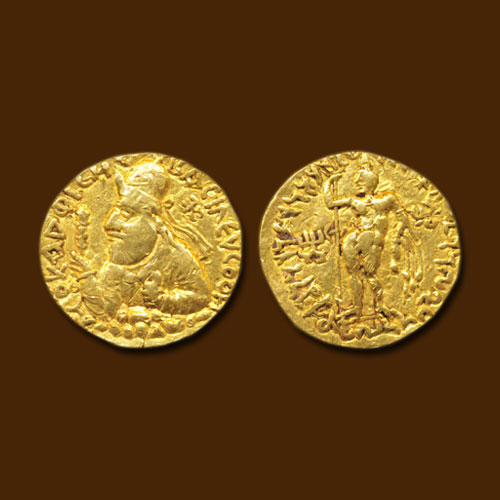
This gold dinar which weighs around 7.89g was issued by Vima Kadphises. The obverse of this coin depicts the bust of the king facing towards left with the doomed crown emerging from the clouds, holding mace-scepter in the left hand, flames emerging from the left shoulder, tamgha in right field with legend BACILEYC OOH MO KADFICHC around. The reverse of this coin depicts Ithyphallic Shiva standing facing head left, holding a composite trident with an axe in the right hand, he-goat skin draped over left arm, tamgha to left, Buddhist Triratna (“Three Jewels”) to right with Kharoshthi legend Maharajasa rajadirajasa Sarvaloga Isvarasa Mahisvarasa Hima Kaphthisasa Tradarasa around.
Image Courtesy: Todywalla Auction
Latest News
-
Twin Fishes and Bull on a Pandya Copper Coin
2026-09-28 MonThe Pandyas were one of the three great Tamil dynasties of the Sangam age, alongside the Cheras a...
-
Sangam-Age Chola Copper Coin with Lion/Tiger, Elephant and Auspicious Symbols
2026-09-28 MonThe Cholas were one of the three major Tamil dynasties of the Sangam age, alongside the Cheras an...
-
Elephant and Lion on a Copper Coin of the Sangam Cholas
2026-09-24 ThuThe elephant and lion were powerful animal symbols in the artistic and political traditions of an...
-
Ganesha and Shiva Together on a Coin of the Shiv Ganga Rajas
2026-09-25 FriOn Anant Chaturdashi, devotees bid farewell to Lord Ganesha with prayers and devotion, celebratin...
-
Elephant on a Punch-Marked Coin of the Vidarbha Janapada
2026-09-23 WedThe history of Indian coinage begins with the remarkable tradition of punch-marked coins, among t...