
The flavour of Indian Food Part 9: Baby Appam
2018-08-24 Fri
Steaming with soft textured Appam of southern Indian find in different variation to suit the alteration added to it. This super dish is found in Kerala, Tamil Nadu and Sri Lanka; it was developed in the Indian subcontinent and most favourite dish for breakfast and dinner.It is made from fermented rice batter and coconut milk and is known as appam, appa,aapa, aappam, chitau pitha, paadu and gulle eriyappa in Malayalam, Tulu, Tamil, Sinhala and Oriya. It is also called Kodava and arpone in Burmese.
The variations are offered in this dish are plain Appma-a bowl-shaped thick pancake, Palapaam- a sweet texture appam served with coconut milk, baby appam-small ball of the plain dough. Kallapaam id made adding Kallu: Palm wine. There is also Neyyappam the famous dish of Syrian Christance. There is also Kandarappam made of four dals and jaggery a sweet dish.
Appma is also a famous part of Indonesian cuisine, the variant of appam is called Kue apem there.
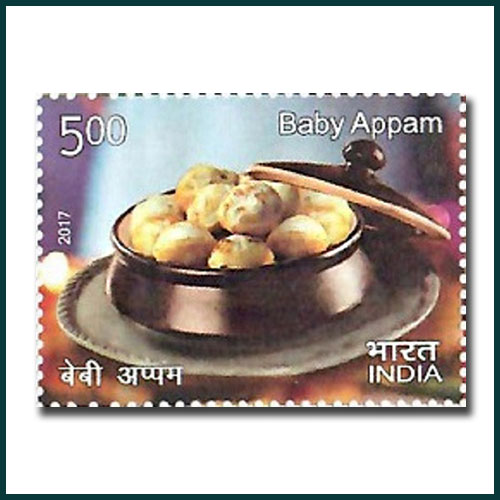
India Post has issued a stamp in 2017, to promote the regional cuisine of India. This stamp was fashioned with a delicious image of baby Appam.
Image Courtesy: thenewsminute.com
Latest News
-
Rare Gold Punch-Marked Gadyana of Jogama, Feudatory of the Chalukyas of Kalyana
2026-11-24 TueThe Chalukyas of Kalyana, also known as the Western Chalukyas, were a prominent dynasty that rule...
-
Silver Half Karshapana Attributed to the Shurasena Mahajanapada
2026-11-24 TueThe Shurasena Janapada was one of the sixteen Mahajanapadas (great territorial states) of ancient...
-
Matsya Avatar of Lord Vishnu on a Copper Coin of the Madurai Nayakas
2026-11-23 MonLord Vishnu is one of the principal deities of Hinduism and is revered as the preserver and prote...
-
Silver Punch-Marked Coin of the Matsya Janapada
2026-11-23 MonPunch-marked coins represent some of the earliest forms of coinage in ancient India, emerging aro...
-
Lion and Elephant Type Copper Drachma of Taxila
2026-11-21 SatIn Continuation, let’s explore another coin of ancient Taxila, we turn our attention to another...