
Fascinating Archaeological Facts on Postage Stamps - 58
2025-07-01 Tue
Yoga encompasses a diverse range of physical, mental, and SPIRITUAL practices with roots in ancient India. The term "yoga" is derived from the Sanskrit word "yuj," which means to unite or connect. It aims to harmonize the body, mind, and Spirit through various techniques, including Aasana (physical postures), Pranayama (breath regulation), Pratyahara (withdrawal of the senses), Dharana (concentration), and Dhyana (meditation), combined with five Yamas, Five Niyamas, and a blissful state call Samadi. Thus it is known as Ashtanga Yoga – Eight limbs of Yoga.The origins of yoga can be traced back to the Harappan Civilization, where archaeological excavations at sites such as Harappa and Mohenjodaro have revealed #seals, dating to approximately 2700 BCE, depicting figures engaged in yoga practices.
References to yoga-like practices are found in the Rigveda and numerous early Upanishads. In yogic tradition, #Lord Shiva is revered as the first yogi, known as Adiyogi. Maharshi Patanjali created Yoga Sutra where he hints carrying the work of his predecessors forward. He meticulously defined yoga as a means to gain mastery over the mind and codified existing practices and philosophies in this renowned text divided in four Padas or chapters.
Yoga comprises several #Schools, including Jnana-yoga, Bhakti-yoga, #Karma -yoga, and Ha?ha-yoga. The #Bhagavadgita elucidates the principles of Jnana, Bhakti, and Karma Yoga.
Thus the influence of yoga can be observed across various #cultural contexts, including folk traditions, the Harappan civilization, the Vedic and Upanishadic Heritage, as well as within Buddhist and #Jain traditions, Darshanas, and the epics of the Mahabharata and Ramayana, alongside the theistic schools of Shaivism, Vaishnavism, and Tantric philosophies.
Subsequent to Patanjali, many sages and yoga Masters made significant contributions to the preservation and evolution of yoga through their documented practices and literary works. The modern period of yoga, spanning from 1700 to 1900 saw the emergence of notable yogacharyas, such as Ramana Maharshi, Ramakrishna Paramhansa, Paramhansa Yogananda, and Vivekananda, who played pivotal roles in its development, last but not the least Shri #bks Iyengar whose efforts made yoga and yogasana practices famous worldwide.
On December 11, 2014, the United Nations general Assembly proclaimed June 21 as International Yoga ay with the efforts of Prime Minister Narendra Modi. This date, coinciding with the Summer Solstice—the longest day of the year in the Northern Hemisphere—holds profound significance on a Global scale.
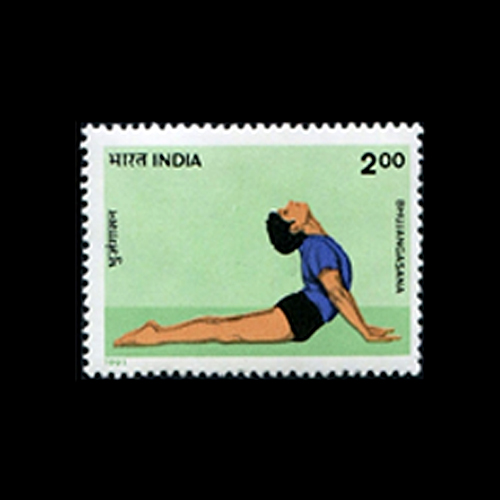
On December 30, 1991, India post introduced a series of four commemorative Stamps featuring various yoga exercises. This initiative represented an early attempt to promote the practice of yoga through philately, preceding its widespread popularity. The stamps depicted distinct asanas, including bhujangasana (Cobra pose), Dhanurasana (Bow Pose), Ustrasana (camel Pose), and Utthita Trikonasana (Extended Triangle Pose).
Latest News
-
The Elephant on an Indo-Greek Silver Drachm of Apollodotus I
2026-09-22 TueElephants were not just an important part of Indian heritage and religious traditions; they also ...
-
Gajalakshmi Flanked by Elephants on a Post-Mauryan Ujjaini Copper Coin
2026-09-22 TueThe association between Gajalakshmi and elephants is one of the most enduring motifs in Indian re...
-
Elephant Head on a Bronze Coin of Indo-Scythian King Maues
2026-09-21 MonAs the eighth day of Ganesh Utsav is celebrated, the elephant once again provides a fascinating l...
-
A Remarkable Elephant-and-Lion Standard on Vrishni Coinage
2026-09-21 MonAs Ganesh Utsav continues, the elephant once again offers a fascinating doorway into India’s an...
-
Elephant and Lion on a Cooch Behar Royal Coin
2026-09-19 SatThe elephant occupies a distinctive place in the cultural traditions of eastern India, particular...