
2026-09-16 Wed
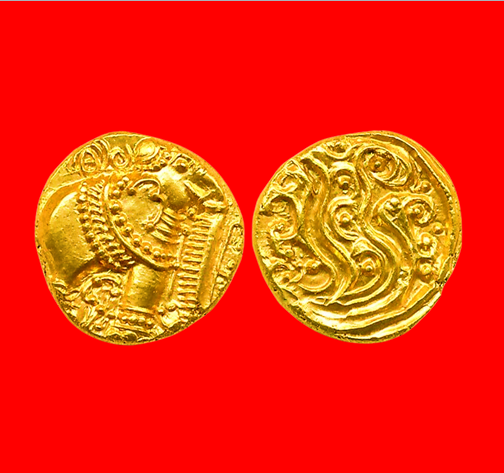
This festive season, the elephant-headed Lord Ganesha brings to mind the enduring cultural significance of the elephant in India’s artistic and religious traditions. This connection finds a fascinating echo in the coinage of the Gangas of Talakadu, whose gold Gajapati Varaha prominently features a beautifully caparisoned elephant.
The Gangas of Talakadu or Western Ganga, ruled over a large part of Karnataka and adjoining regions for several centuries, with their capital at Talakadu on the banks of the River Kaveri. The Western Gangas maintained close relations with powerful neighbouring dynasties, including the Pallavas, Chalukyas and Rashtrakutas. Their period witnessed the growth of Jainism as well as the patronage of Hindu religious traditions, while Kannada and Sanskrit flourished as important literary languages. Talakadu developed into an important centre under the Gangas and remained closely associated with their political and cultural legacy.
The coinage of the Western Gangas is particularly interesting for collectors because of its distinctive iconography and the use of Kannada legends. Among their gold issues are the Gajapati Varahas, commonly associated with the elephant motif. The term Varaha is traditionally used in South Indian numismatics for a gold coin or denomination, rather than necessarily indicating that the coin bears the Varaha incarnation of Vishnu.
Here, the gold Gajapati Varaha, weighing 3.92 g, belongs to the “Elephant” type. Its obverse depicts a caparisoned elephant standing facing right, with a Kannada legend above it. On the reverse is an ornamental floral scroll, forming an elegant decorative composition.
The elephant was an important symbol in the political and artistic traditions of early medieval South India. Its prominent representation on this coin gives the issue a distinctive visual character, while the Kannada inscription reflects the growing importance of the regional language in the coinage and cultural milieu of Karnataka.
The Gangas of Talakadu Gajapati Varaha thus combines historical, linguistic and artistic significance. The caparisoned elephant on the obverse and floral scroll on the reverse demonstrate the distinctive aesthetic of Ganga-period coinage, while the Kannada legend provides an important link to the linguistic and cultural history of Karnataka. For collectors of South Indian gold coinage, it is a fascinating reminder of the enduring legacy of the Western Ganga dynasty.
-
Elephant Coin of Siri Satakarni, Satavahana
2026-09-16 Wed -
Rare “Ganapati–Pantapradhan” Rupee of Patwardhans of Miraj
2026-09-15 Tue -
Ganesha on a Nayaka Copper Coin
2026-09-15 Tue -
Gold Gadyana of Manuma Siddhi III, Telugu Cholas
2026-09-09 Wed -
Rare Copper Coinage of the Kakatiyas King Prataparudra II
2026-09-09 Wed