
2026-08-31 Mon
The history of Tanjore entered a new chapter in the 17th century when the Marathas established their rule in the fertile and culturally rich Kaveri delta. The Tanjore Maratha kingdom emerged after Venkoji (Ekoji I), the half-brother of the celebrated Maratha ruler Chhatrapati Shivaji Maharaj, captured Tanjore in 1676. The Marathas subsequently ruled the region for nearly two centuries, until the kingdom was annexed by the British in 1855 following the death of Shivaji II, the last ruler of the dynasty.
Although the Tanjore Marathas were a relatively small kingdom compared with the great empires of the subcontinent, their court became an important center of art, literature, music, scholarship and religion. Their rulers patronized Tamil, Telugu, Sanskrit and Marathi traditions, contributing significantly to the distinctive cultural heritage of Thanjavur.
The dynasty also issued a fascinating variety of coins in gold, silver and copper. Tanjore Maratha coinage frequently incorporated Hindu religious imagery and legends in scripts associated with the ruling court. These coins provide valuable evidence of the religious traditions, political authority and cultural environment of the kingdom.
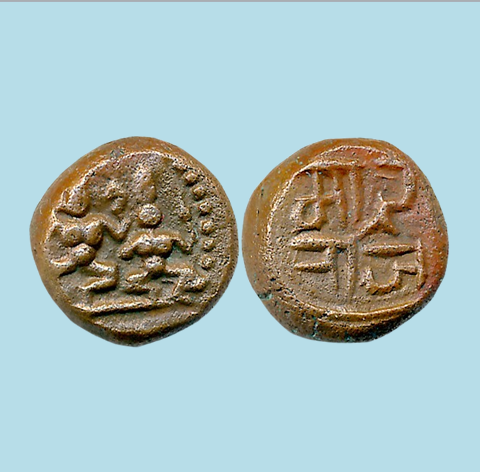
Here, the copper Mudra, weighing 2.69 grams, is a particularly appealing example of Tanjore Maratha coinage. The obverse of the coin depicts Lord Shiva and Goddess Parvati are seated facing the viewer. The representation of Shiva and Parvati on the coin reflects the strong religious character of the coinage and the importance of Shaivism in the cultural landscape of Tanjore.
The reverse bears the Devanagari legend “Maharaj”, meaning “Great King” or “Maharaja.” The use of a royal title reinforces the association of the coin with the authority and sovereignty of the Tanjore Maratha rulers.
Beyond its monetary function, this modest copper coin offers a glimpse into the world of the Tanjore Marathas. The combination of Shiva and Parvati on the obverse with a royal Devanagari legend on the reverse brings together two important elements of the kingdom—its religious traditions and Maratha royal identity.
-
Silver Rupee from Tibet
2026-08-31 Mon -
Baroda Last Ruling Maharaja Pratap Singh Gaekwad’s Rare Mohur
2026-08-29 Sat -
Shiva-Parvati in Gold: The Sacred Varaha of Krishna Raja Wodeyar III
2026-08-29 Sat -
An Iconic Coin of the Sangam Pandyas Features Elephant, Trident and Man
2026-08-28 Fri -
An Ancient Sangam-Age Chera’s Copper Coin
2026-08-28 Fri