
2026-08-13 Thu
In the early historic Deccan, after the height of Satavahana power and during its gradual fragmentation, several local ruling families asserted authority in different regions. One such family was the Kuras who controlled territory centred on the Kolhapur–Belgaum region of southern Maharashtra and northern Karnataka. Their history is constructed on the basis of numismatic evidence.
The Kuras flourished roughly in the 1st–2nd centuries CE. Coins of the family have been recovered in significant numbers from sites such Kolhapur and surrounding areas.
The distinctive dynastic emblem of the Kuras was the bow and arrow, which appears prominently on the obverse of their coins. Known rulers include Maharathi Kura, Vasishthiputra Kura or Vilivayakura, Madhariputra Sivalakura, and Gautamiputra Vilivayakura. The use of matronymics follows the same convention popular among the Satavahanas and other contemporary Deccan families.
Their coinage demonstrates both continuity with broader Deccan traditions (tree-in-railing, multi-arched chaitya) and a clear assertion of local identity through the bow-and-arrow motif and the title “Rano” (King).
Rano Vasithiputra Kura or Vasishthiputra Kura is known primarily from his lead coins. He is dated approximately to the late 1st or early 2nd century CE. The title “Rano” (from Sanskrit Rājan) indicates royal status.
The Kuras issued mainly lead coins with some copper or lead-alloy pieces. These are typically larger and heavier than many contemporary Satavahana lead issues.
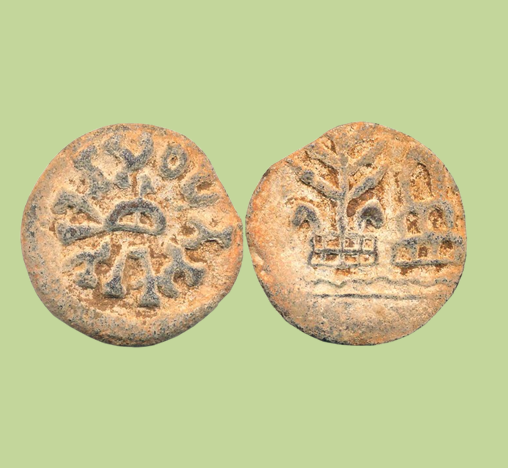
Here, the Lead coin weighs 15.22 gram. The obverse depicts, Bow and Arrow in centre, complete Bramhi Legend “Rajno Vasithiputasa Kurasa”. The reverse features Tree in the railing on left, Six arched chaitya on right, river below.
Rano Vasithiputra Kura stands as one of the clearest voices of this local dynasty, and his lead coins — with their bold bow-and-arrow emblem and carefully executed reverse designs — remain important artifacts for understanding regional power, identity, and economy in the post-Satavahana Deccan.
-
Glimpse into Sri Satkarni’s Reign through his Lead Coin
2026-08-13 Thu -
Copper Nazarana Paisa of Jaipur: The Jhar-Marked Coinage of Sawai Jaipur
2026-08-12 Wed -
Rare Copper Nazarana of Tukoji Rao II from Indore
2026-08-12 Wed -
Rare Nazarana Rupee of the Holkar State, depicting King Jaswant Rao as a bee at the feet of Lord Vishnu
2026-08-11 Tue -
Silver Nazarana Mudra of Tukoji Rao II, Holkar State
2026-08-11 Tue