
Fascinating Archaeological Facts on Postage Stamps - 39
2025-05-28 Wed
The ShoreTemple is a complex of temples and shrines situated along the Bay of Bengal in mahabalipuram, near Chennai, Tamil Nadu. Recognized as a UNESCO World Heritage Site, it forms part of the Group of Monuments at Mahabalipuram, which was commissioned by the Pallava Kings during the 7th and 8th centuries.Mahabalipuram, also known as Mamallapuram, served as a significant port city for the Pallavas. The name "Mamallapuram" honors the great Pallava ruler Narasimhavarman I, who reigned from 630-68 CE.
The Shore Temple was constructed under the reign of Narasimhavarman II (700 to 728 CE) of the Pallava dynasty, is notable for being the oldest significant structural temple in South India. It belongs to the earliest phase of Dravidian temple architecture and is a splendid example of Pallava art. This structural temple is notable for its design, which involves the careful placement of large blocks of granite. Historical accounts from foreign travelers often referred to the Shore Temple as the Seven Pagodas, although only two remain visible today. The 2004 Tsunami , exposed many rock-cut temples, inscriptions, and sculptures, which have since been excavated and restored by the Archaeological Survey of India (ASI).
The Shore Temple consists of three temples. The main shrine, Ksatriyasimhesvara, faces east, while another shrine, Rajasimhesvarama, faces west; both enshrine a fluted #Shiva linga. These shrines are topped with spires, or vimana, adorned with intricate carvings that depict various deities and narratives from Hindu scriptures. Between these two Shiva temples lies a third shrine, Narapatima Pallavagriham, which features a prominent image of reclining #LORD #Vishnu . For many years, the Shore Temple remained concealed beneath sand.
Underwater archaeological explorations have identified an underwater site approximately 700 meters east of the Shore Temple. This investigation revealed ruined walls, sculptures, rectangular stone blocks aligned parallel to the shoreline, and remains of forty additional monuments. These discoveries have led to emerging theories suggesting that a portion of the ancient Mamallapuram is now submerged beneath the sea.
Recent excavations conducted north and south of the Shore Temple have uncovered rock-cut figures that represent religious themes from the period prior to the temple's construction. Among these findings are a monolithic Bhuvaraha, the base of a #Durga shrine featuring deer, and a square socket likely intended for a mahastambha.
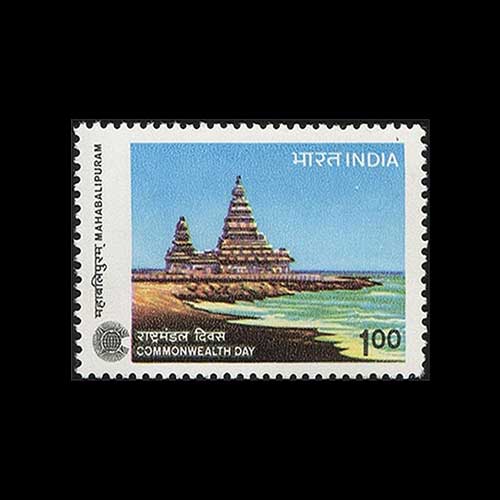
On 14 March 1983, India Post issued a commemorative stamp featuring the Shore Temple as part of the Commonwealth Day Series. The stamp served to promote the #historical and cultural significance of Mahabalipuram.
In 2023, the Shore Temple achieved a notable milestone by becoming #India’s first archaeological site to implement #GreenEnergy initiatives.
Latest News
-
Mithuna (Couple) Type Coin from the Post-Mauryan Ujjaini Region
2026-11-17 TueContinuing our exploration of the distinctive coinage of the Post-Mauryan Ujjaini region, let us ...
-
Lord Shiva Standing Type Copper Coin of the Ujjaini Region from Post-Mauryan Period
2026-11-17 TueThe Post-Mauryan period (200 BCE–300 CE) witnessed the emergence of several regional kingdoms, ...
-
Rare Silver 1½ Shana Punch-Marked Coin of Panchala Janapada
2026-11-16 MonThe Panchala Janapada was one of the sixteen Mahajanapadas of ancient India, flourishing during t...
-
Earth God on Panchala Copper Coin of King Bhumimitra
2026-11-16 MonThe ancient kingdom of Panchala was one of the prominent Mahajanapadas of northern India. Located...
-
Silver Punch-Marked Coin of Vidarbha Janapada – Melghat Region
2026-11-13 FriThe emergence of Janapadas during the ancient period marked an important phase in India's politic...