
Fascinating Archaeological Facts on Postage Stamps -13
2025-04-30 Wed
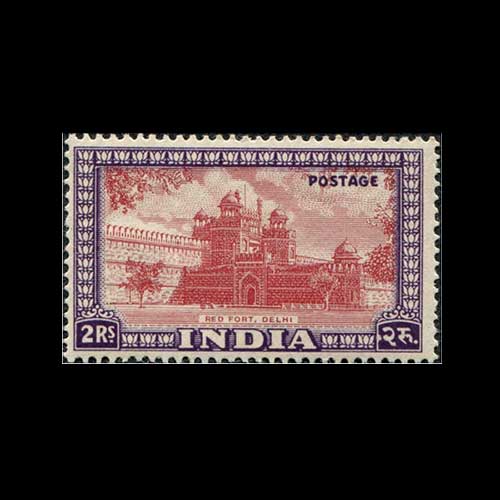
The next stamp in the Archaeological and Historical Monuments Definitive series, released in 1949, features the Red Fort or Lal Qila. This incredible UNESCO World Heritage Site, located in Delhi, was built in 1648 by the Mughal Emperor Shah Jahan as a fortified palace for his capital, Shahjahanabad.The construction journey of the Red Fort kicked off in 1639, when Shah Jahan decided to move his capital from Agra to Delhi. The fort spans an expansive area of 125 acres and is constructed from large red #sandstone bricks. It embodies a harmonious blend of Indo-Islamic, Persian, and Timurid architectural styles, thoughtfully designed by esteemed architects Ustad Hamid and Ustad Ahmad Lahori. Major structures in the fort complex include a complex of palaces, Entertainment halls, balconies, baths, indoor canals, and geometrical gardens. Notable among them are the Lahori Gate, Delhi Gate, Naubat Khana, DiwaniAam, Diwani Khas, Moti Masjid, etc. One of the most exciting treasures was Shah Jahan’s famous Peacock Throne, which, unfortunately, was dismantled and taken to Persia by the Iranian emperor Nader Shah during his invasion in the early 18th century.
Although we often think of forts as imposing structures with tall battlements and a focus on Military strength, this one breaks the mold! Its elegant Mughal architecture, with intricate palaces, gardens, and open courtyards, gives it a more palatial vibe than a defensive structure. It was designed as a royal residence and a fortified complex, blending luxury with defense. The red sandstone walls, MOATS, and bastions are fort-like, but the ornate interiors and ceremonial spaces can make it feel less 'fortress-y.'
One of the key aspects at the Red Fort is the hoisting of the Indian national flag on Independence Day each year. It began on 15 Aug 1947, when India's first Prime Minister, Jawaharlal Nehru, proudly raised the Indian tricolor flag above the Lahori Gate, marking the end of colonial rule and the start of a new, brighter era for India .
With a face value of Rs 2, this #stamp with a beautiful image of the Red Fort wonderfully represents India’s rich #History and vibrant #Heritage.
Latest News
-
Mithuna (Couple) Type Coin from the Post-Mauryan Ujjaini Region
2026-11-17 TueContinuing our exploration of the distinctive coinage of the Post-Mauryan Ujjaini region, let us ...
-
Lord Shiva Standing Type Copper Coin of the Ujjaini Region from Post-Mauryan Period
2026-11-17 TueThe Post-Mauryan period (200 BCE–300 CE) witnessed the emergence of several regional kingdoms, ...
-
Rare Silver 1½ Shana Punch-Marked Coin of Panchala Janapada
2026-11-16 MonThe Panchala Janapada was one of the sixteen Mahajanapadas of ancient India, flourishing during t...
-
Earth God on Panchala Copper Coin of King Bhumimitra
2026-11-16 MonThe ancient kingdom of Panchala was one of the prominent Mahajanapadas of northern India. Located...
-
Silver Punch-Marked Coin of Vidarbha Janapada – Melghat Region
2026-11-13 FriThe emergence of Janapadas during the ancient period marked an important phase in India's politic...