
Science and Technology on Indian Postage Stamps-15
2025-12-20 Sat
The International Geographical Union (IGU) is a distinguished non-governmental organization committed to the advancement of geography as a Discipline. Its primary objective is to promote the field of geography through the initiation and coordination of geographical Research. The IGU was founded in 1922 in the aftermath of the World War I, when representatives from seven nations convened in Brussels to establish its foundations. The concept of an international organization for geographers, however, can be traced back 50 years earlier, to the First International Geographical Congress held in Antwerp, Belgium, in 1871.George Kish in ‘International Geographical Union: A Brief History' writes that the idea for the Congress was first proposed by CHARLES Ruelens, a respected Belgian scholar and librarian. The initiative stemmed from a desire to honor two eminent figures in early mapmaking and geography, Mercator and Ortelius, through the erection of statues in their Homeland in Flanders, Belguim.
The IGU organizes the International Geographical Congress every four years and actively promotes regional conferences and other meetings that align with its objectives. In addition, the organization facilitates the participation of geographers in the Global scientific community through its formal affiliations with institutions such as the International Science Council (ISC) and the International Council for Philosophy and Human Sciences (CIPSH).
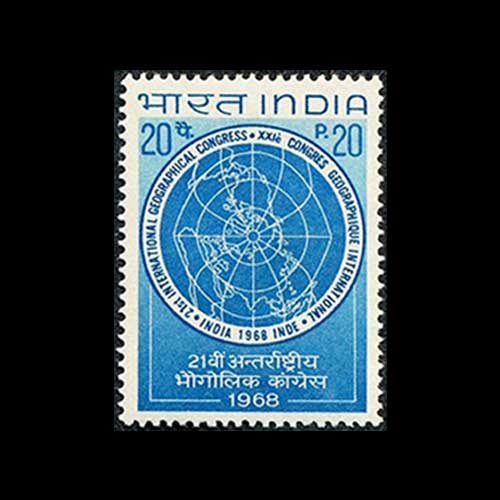
A noteworthy event in the history of the IGU was the 21st International Geographical Congress, which took place in New Delhi from 01-08 December 1968. This event was particularly significant as it marked the first time the Congress was hosted in Asia. The Congress was sponsored by the Government of India and organized by the Indian National Geographical Committee, under the leadership of Prof. S.P. Chatterjee. It featured meetings of the 22 commissions of the Union, along with sessions of nine sections, 31 symposia, 23 field study meetings, and 11 geographical Tours. 17 commissions, established in 1964, presented their final reports addressing specific branches of geography, including Applied Geography, World Population and #Medical Geography, teaching of Geography and Quantitative Methods, National Atlases, Interpretation of Aerial Photography, Economic Regionalization, World #Land Use and Agricultural Typology. The discussions and presentations were attended by approximately 1,200 delegates from 64 member countries, significantly contributing to the advancement of geographical knowledge and understanding.
The opening session of the Congress was graced by an address from former Prime Minister #IndiraGandhi. The Central theme of the Congress was the application of modern geographical techniques in the study and planning of economic and social changes in developing countries. The event also underscored the valuable contributions of Indian geographers. Furthermore, a Map exhibition was hosted at the Lalit Kala Akademi, and the International Cartographic Association (ICA), an affiliate of the IGU, convened meetings in New Delhi during this period, focusing on cartography and attracting attendance from official government delegates.
On 01 December 1968, coinciding with the opening day of the 21st International Geographical Congress, India post commemorated this important occasion by issuing a special postage stamp, valued at 20 paise, featuring a design of the global map.
Latest News
-
Science and Technology on Indian Postage Stamps-14
2025-12-09 TueMarie Curie, a distinguished POLISH-born physicist and chemist, is widely recognized as one of the m...
-
Science and Technology on Indian Postage Stamps-13
2025-12-08 MonWheat is recognized as the second most crucial staple Food crop in India, following rice, and plays ...
-
Science and Technology on Indian Postage Stamps-12
2025-12-08 MonThe survey of India (SOI) serves as the principal mapping and surveying agency across the country. E...
-
Science and Technology on Indian Postage Stamps-11
2025-12-05 FriDr. Homi Jehangir Bhabha was one of India's most esteemed scientists and is widely recognized as the...
-
Science and Technology on Indian Postage Stamps-10
2025-12-05 FriIn the mid-19th Century, the geological community in Europe and North America recognized the need fo...