
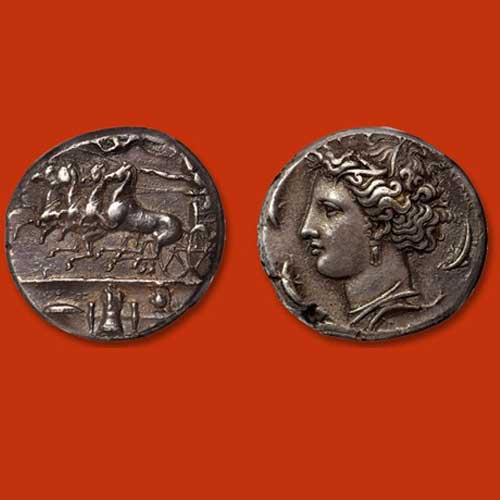
Sicilian Dekadrachm by Designer Euainetos
2020-12-10 Thu
Within ancient numismatics, the practice of signing one’s work wasn’t unknown, with those who were the most accomplished at their craft leaving their signature to be recognized for centuries to come. One of the most celebrated among these classical artists was Euainetos, who flourished in the Sicilian city of Syracuse toward the end of the fifth century BCE.Euainetos created engaging designs that graced the impressive dekadrachms of the city. While tetradrachms are the much more commonly encountered “large” silver denomination in the ancient Greek world, it is the dekadrachm that allowed the broadest flan on which the engraver could express their artistry. Meanwhile, the coin’s thick nature presented the possibility of very high relief.
The Sicilian Dekadrachm shown above depicts quadriga or four-horse chariot which seems to float majestically above the ground line while the other side depicts a high-relief portrait of Arethusa – a Greek Goddess.
Image Courtesy: coinweek.com
Latest News
-
Elephant and Lion on a Copper Coin of the Sangam Cholas
2026-09-24 ThuThe elephant and lion were powerful animal symbols in the artistic and political traditions of an...
-
Ganesha and Shiva Together on a Coin of the Shiv Ganga Rajas
2026-09-25 FriOn Anant Chaturdashi, devotees bid farewell to Lord Ganesha with prayers and devotion, celebratin...
-
Elephant on a Punch-Marked Coin of the Vidarbha Janapada
2026-09-23 WedThe history of Indian coinage begins with the remarkable tradition of punch-marked coins, among t...
-
Gandabherunda and Four Elephants on a Gold Half Varaha of Achyutadevaraya
2026-09-23 WedThe Gandabherunda, the mythical two-headed bird of Indian tradition, is one of the most striking ...
-
The Elephant on an Indo-Greek Silver Drachm of Apollodotus I
2026-09-22 TueElephants were not just an important part of Indian heritage and religious traditions; they also ...