
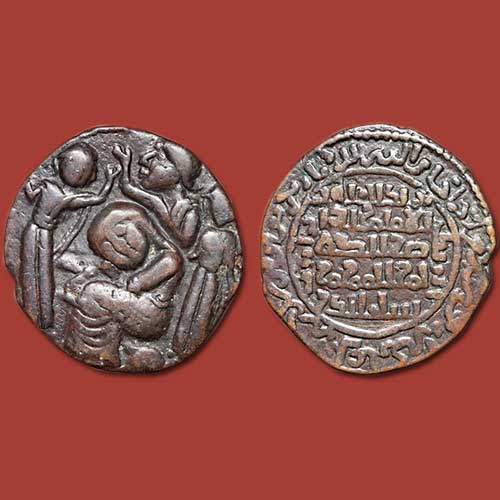
Dirham of Husam al-Din Yuluq Arslan depicts mourning scene
2020-07-04 Sat
Artuqid was a Turkmen dynasty that ruled the province of Diyarbakir in northern Iraq (now in southeastern Turkey) through two branches: at Hisn Kayfa and Mayyafariqin.They ruled in eastern Anatolia, Northern Syria, and Northern. The Artuqid dynasty took its name from its founder, Zaheer-ul-Daulah Artuk, who was of the Dodger branch of the Oghuz Turks and ruled one of the Turkmen beyliks of the Seljuk Empire.
The above shown silver Dirham was issued under the reign of Husam al-Din Yuluq Arslan. The obverse depicts three figures with extended arms standing around one figure seated to left in a posture of mourning. On the other hand, the reverse shows legend in Kufic bearing the name and titles of al-Nasir I Salah al-Din (Saladin) Yusuf and the name and titles of Husam al-Din Yuluq Arslan.
The figures on the obverse may represent actual citizens in mourning for Saladin. Alternatively, they may be symbolic representations of astronomical/astrological entities which were said to have predicted the death of Saladin, and then mourned him – so exceptionally great was the tragedy of his passing that the stars and planets.
Image Source: www.vcoins.com
Latest News
-
Elephant and Lion on a Copper Coin of the Sangam Cholas
2026-09-24 ThuThe elephant and lion were powerful animal symbols in the artistic and political traditions of an...
-
Ganesha and Shiva Together on a Coin of the Shiv Ganga Rajas
2026-09-25 FriOn Anant Chaturdashi, devotees bid farewell to Lord Ganesha with prayers and devotion, celebratin...
-
Elephant on a Punch-Marked Coin of the Vidarbha Janapada
2026-09-23 WedThe history of Indian coinage begins with the remarkable tradition of punch-marked coins, among t...
-
Gandabherunda and Four Elephants on a Gold Half Varaha of Achyutadevaraya
2026-09-23 WedThe Gandabherunda, the mythical two-headed bird of Indian tradition, is one of the most striking ...
-
The Elephant on an Indo-Greek Silver Drachm of Apollodotus I
2026-09-22 TueElephants were not just an important part of Indian heritage and religious traditions; they also ...